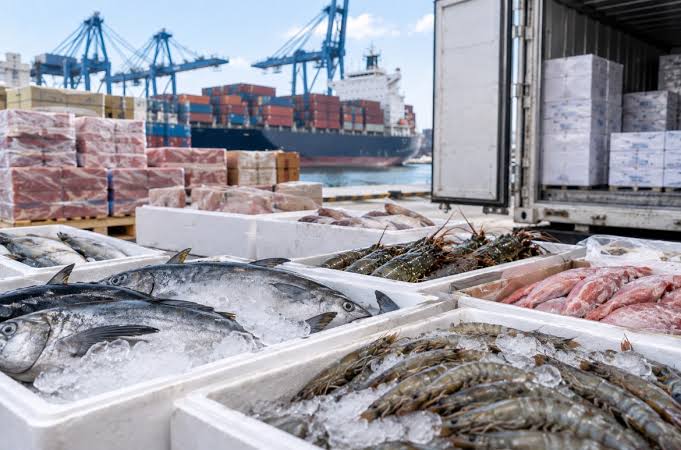
For seafood importers, combining multiple products in one container can be a practical option when their business requires different types of fish, shrimp, or other frozen seafood products. However, a mixed container involves more than simply loading different products into the same shipment. Order quantities, packaging specifications, storage requirements, and product readiness all affect whether the arrangement is feasible.
For businesses sourcing seafood from Vietnam, planning a mixed container should start with actual import requirements rather than simply the number of products that can be combined.
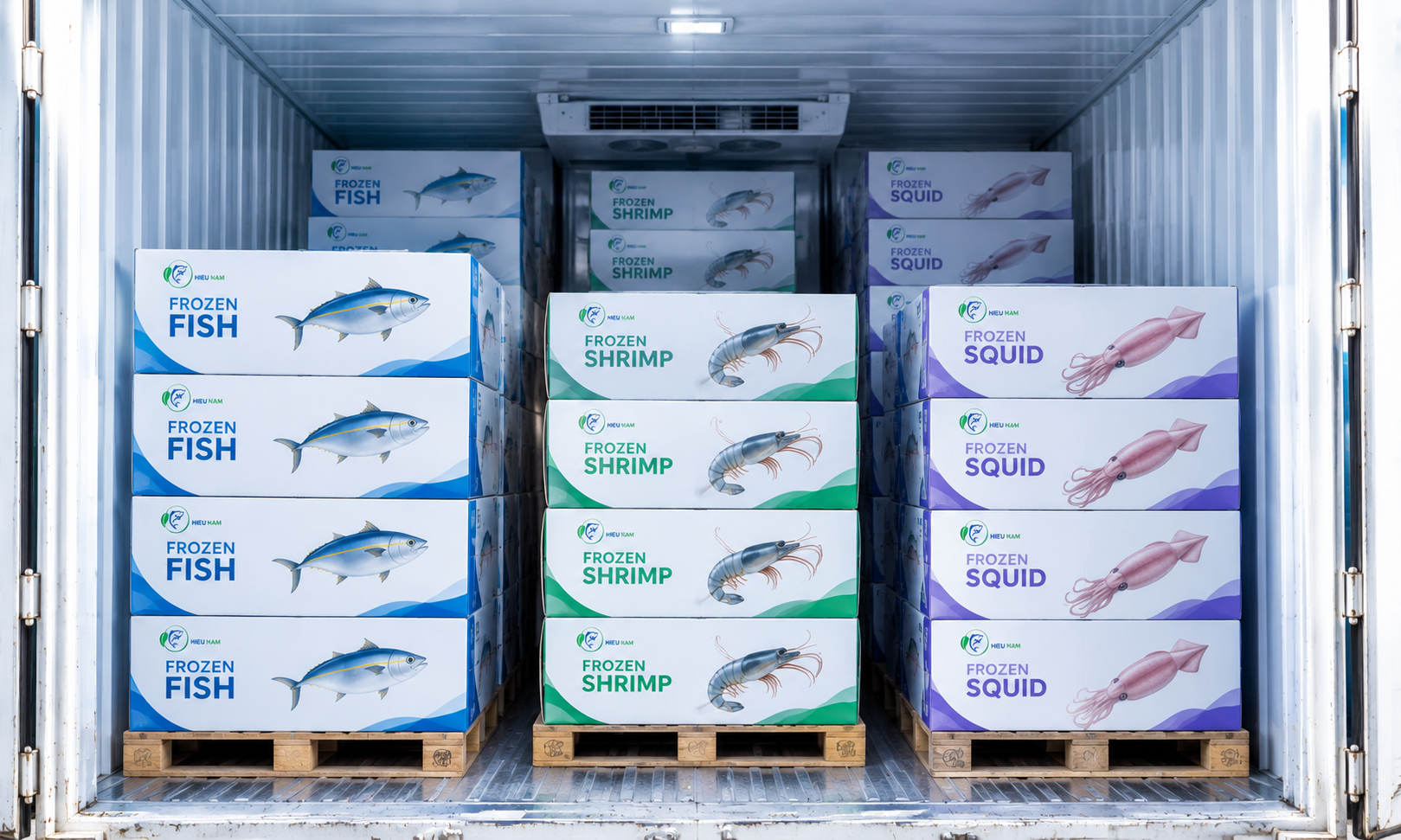
A mixed seafood container is a shipping arrangement in which two or more products are loaded into the same container under an agreement between the buyer and supplier.
In B2B frozen seafood trade, products may differ in species, size grades, product forms, or packaging specifications. For example, an importer may be interested in frozen whole fish, fish fillets, and frozen shrimp to serve different customer segments.
Instead of ordering each product in a separate shipment, the buyer can request a quotation for a mixed-container order. The supplier will need to review the minimum order quantity for each product, stock availability, storage requirements, and loading arrangements before confirming feasibility.
The key point is that the feasibility of combining multiple products must be assessed on a case-by-case basis. Products cannot automatically be shipped together simply because they are all frozen.
A seafood distributor may handle several products to serve wholesale, retail, or foodservice channels. As a result, import demand may not always be concentrated on a single product.
In this situation, a mixed container may help the business coordinate multiple products within one shipment, provided that the quantities and shipping requirements of each product are compatible.
For example, a distributor that currently imports frozen fish and wants to add shrimp to its product range could discuss the possibility of combining these two categories in one container. The final arrangement would depend on packaging specifications, storage requirements, and order quantities for each product.
Not every importer needs large quantities of each product in every order. For businesses handling multiple seafood items, allocating the right quantity to each product can be just as important as selecting the products themselves.
A mixed container is worth considering when a buyer wants to distribute the order across several products instead of allocating the entire shipment to one item.
However, buyers should distinguish their purchasing needs from the supplier's sales conditions. If each product has its own minimum order quantity, those requirements must still be met unless an alternative arrangement is agreed upon with the exporter.
Shipping multiple products together may help businesses coordinate receiving and inventory planning. This can be particularly useful when the products have compatible production schedules, availability dates, and delivery requirements.
On the other hand, if one product is not yet ready or requires a longer preparation period, waiting for the complete order may affect the shipment schedule. The readiness of each product should therefore be confirmed before the container loading date is finalized.
The product mix depends on the buyer's requirements and the supplier's actual supply capabilities. For frozen seafood sourced from Vietnam, importers may discuss the following categories.
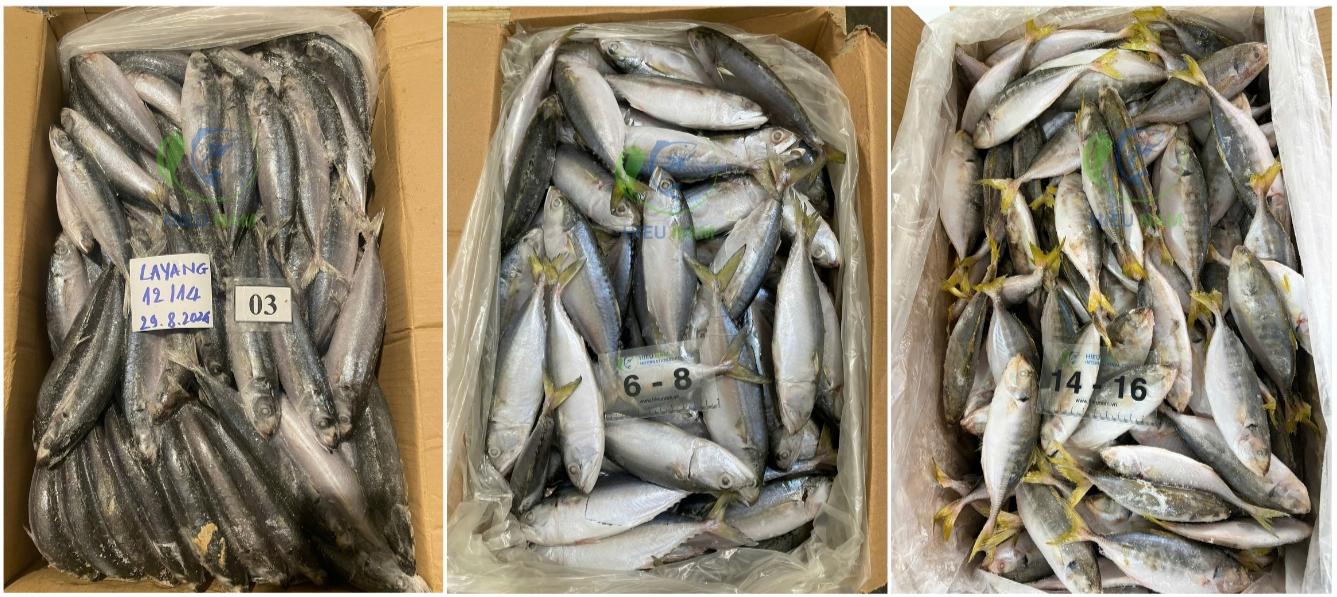
Depending on the supplier's product range, frozen fish may include scad, Indian mackerel, golden pomfret, tilapia, pangasius, and yellowfin tuna. Each product has its own commercial specifications, ranging from whole fish to fillets and other cuts.
When preparing an order, buyers should clearly specify the product name, size grade, product form, and packaging requirements. Providing accurate specifications helps the supplier assess availability and reduces the risk of confusion between products with similar trade names.
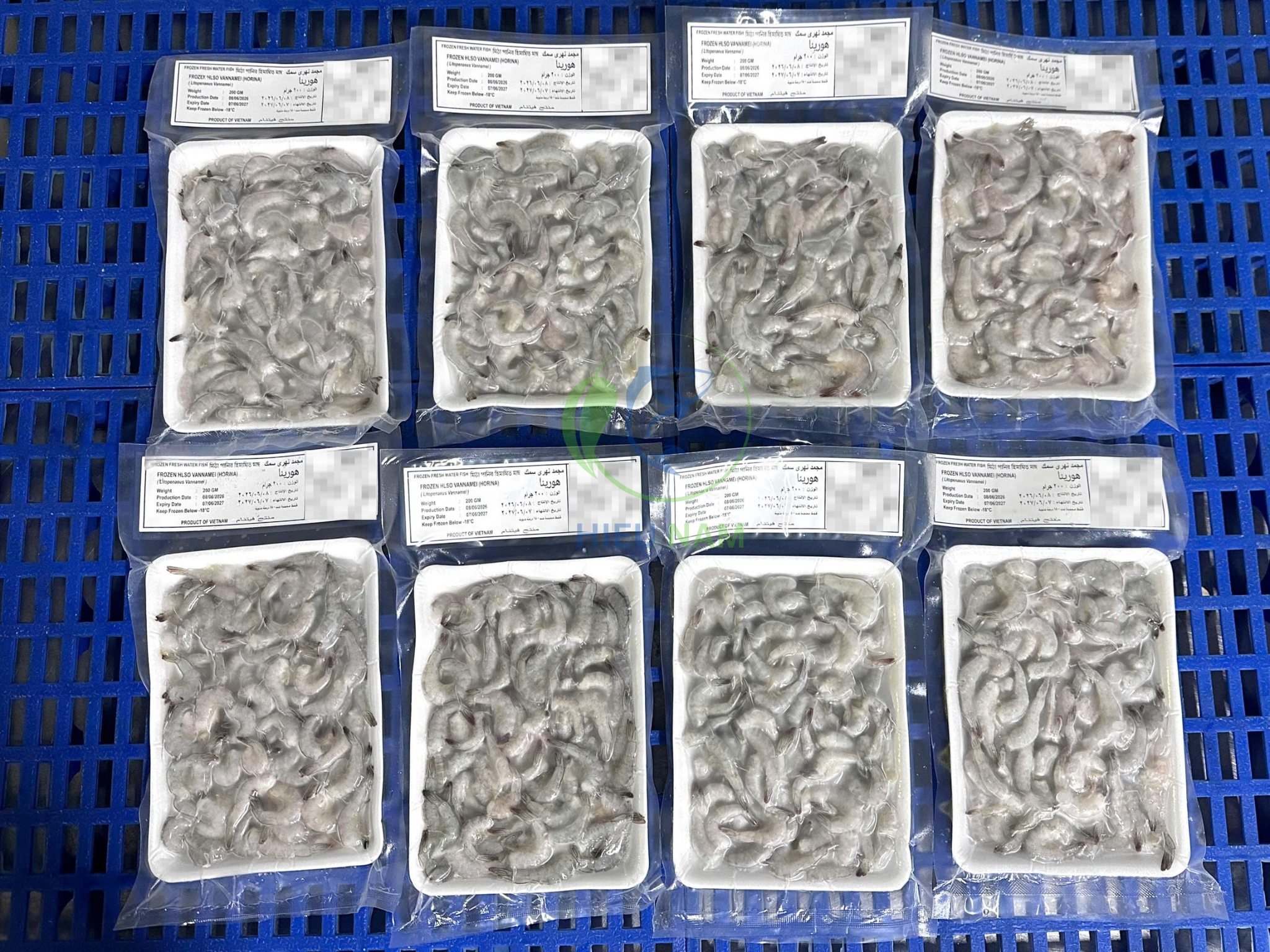
Shrimp may be considered as part of a mixed shipment, depending on the destination market's requirements and the shipping conditions. Important details include shrimp species, size grade, processing form, packaging specifications, and order quantity.
If the order includes multiple shrimp specifications, each item should be clearly identified in the purchase order to facilitate product verification, packing, and export documentation.
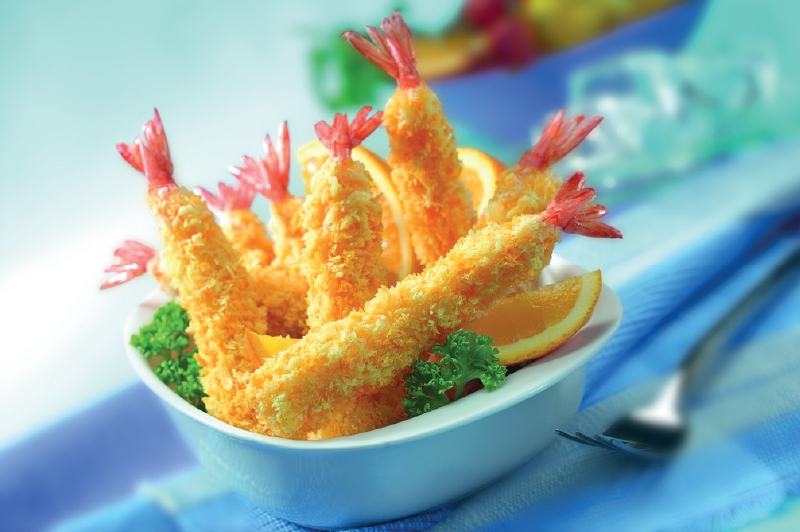
In addition to conventional frozen seafood products, buyers may discuss value-added items such as breaded shrimp or breaded pangasius fillets, subject to the supplier's available product range.
These products require separate consideration of storage conditions, packaging, labeling, and import requirements. Importers should not assume that every processed product can be combined with other seafood items in the same container without checking compatibility first.

This is one of the key questions importers should evaluate using actual quotations and shipping arrangements, rather than assuming that combining more products will automatically reduce costs.
Combining several products may help a business coordinate different purchasing needs within one shipment. However, this does not necessarily mean the total cost will be lower.
When comparing options, buyers should consider:
Product prices: The unit price of each item based on its specifications and order quantity.
Shipping costs: Container freight, applicable surcharges, and other costs under the agreed delivery terms.
Container utilization: Total shipment weight, carton dimensions, and loading arrangements.
Potential additional costs: Storage, waiting time, or schedule adjustments if products are not ready at the same time.
Product-specific requirements: Packaging, labeling, documentation, and storage conditions.
A useful approach is to compare the total cost of each option on the same basis: the same product mix, quantities, delivery terms, and cost inclusions. This allows the importer to determine which arrangement better suits its purchasing plan.
When planning to import multiple products in one container, the first step is to identify the required product range and estimated quantity for each item. This provides a basis for assessing supply availability, product compatibility, and shipment schedules.
Hieu Nam supplies Vietnamese seafood products to international customers. For orders involving multiple items, buyers can share their product requirements to discuss specifications, quantities, availability, and possible shipping arrangements.
To make the quotation process more specific, importers should prepare the following information:
Destination market and discharge port.
List of required products.
Size grades, product forms, and packaging specifications.
Estimated quantity for each item.
Preferred delivery schedule.
Specific labeling, documentation, or storage requirements.
With these details, both parties can assess the feasibility of the proposed product mix and identify the conditions that need to be confirmed before the order is finalized.
Contact Hieu Nam to discuss your product portfolio and seafood sourcing requirements from Vietnam.
HIEU NAM INTERNATIONAL CO., LTD.
Website: https://www.hieunam.vn
Email: export@hieunam.vn
WhatsApp: +84 55 978 6740