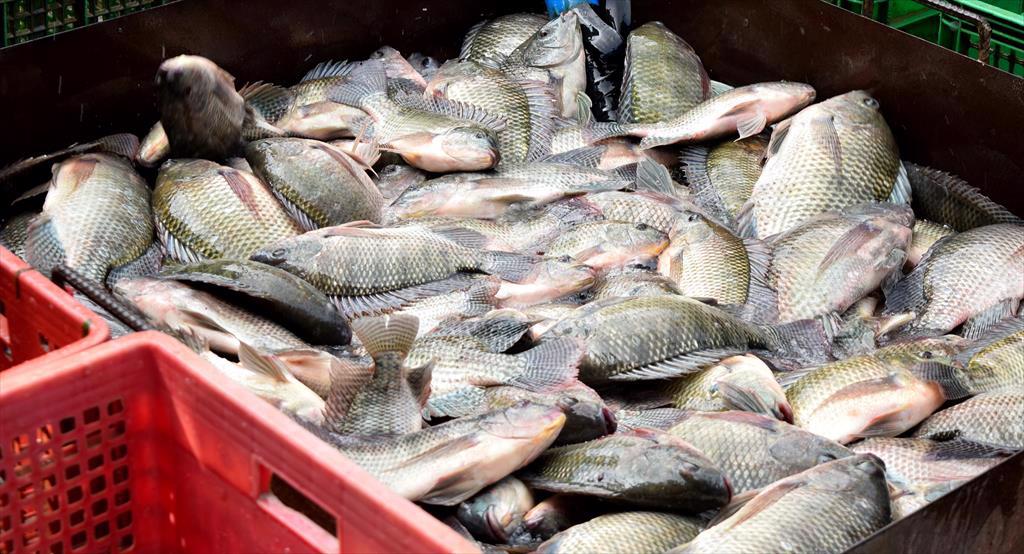
Vietnam's tilapia exports to Africa recorded significant growth during the first nine months of 2026, reflecting the country's expanding presence in the region. According to the Vietnam Association of Seafood Exporters and Producers (VASEP), export value reached USD 2.1 million, an increase of 160% compared with the same period in 2025.
Although Africa accounted for only 2% of Vietnam's total tilapia export value, it emerged as one of the faster-growing destinations. The number of African markets receiving Vietnamese tilapia also increased, indicating a broader geographical reach for the product.
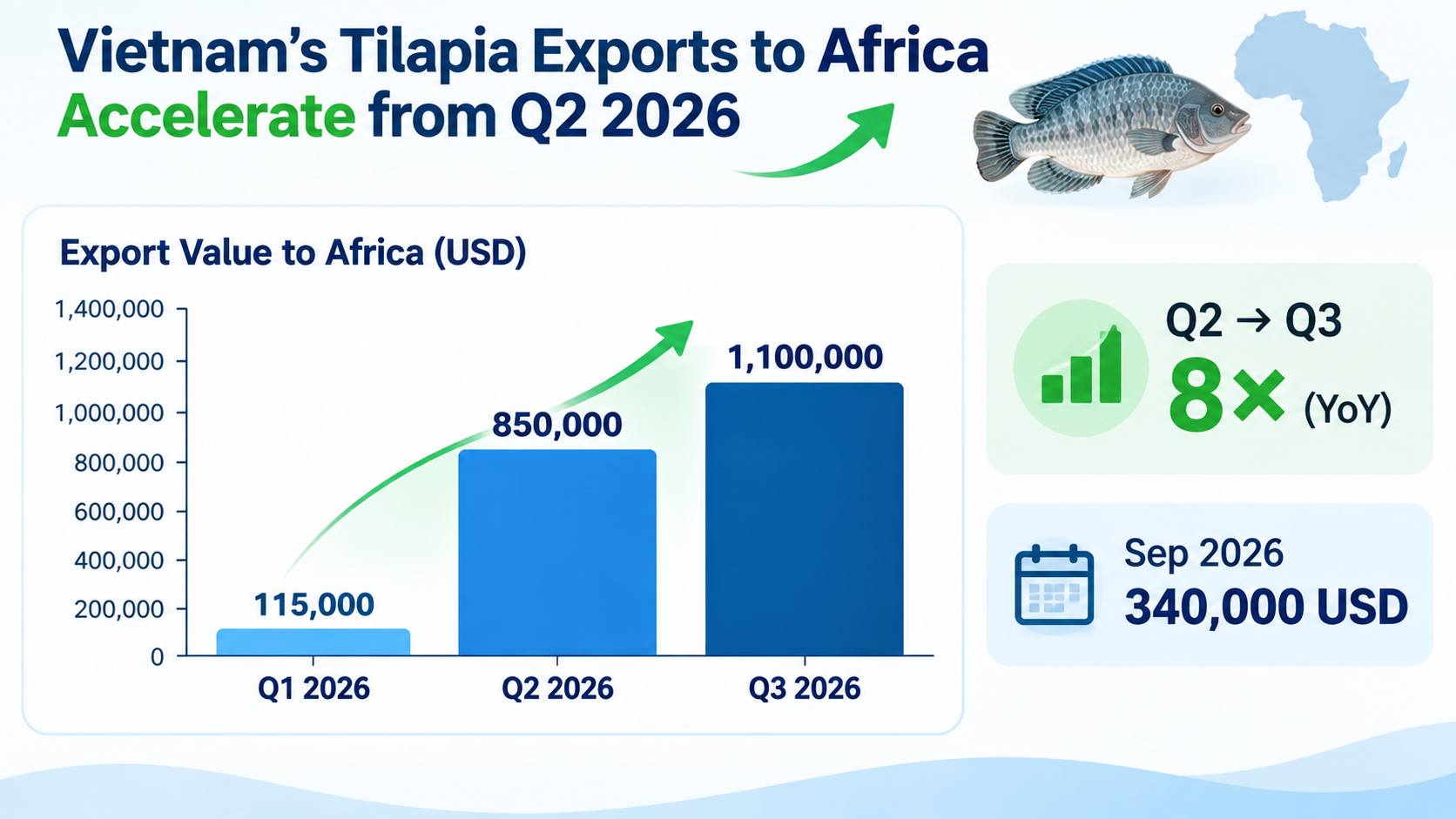
VASEP data shows that Vietnam's tilapia exports to Africa began 2026 with a decline before recovering strongly in the following quarters.
During the first quarter, exports reached USD 115,000, down 69% year-on-year. The situation changed in the second quarter, when export value rose to USD 850,000, three times the level recorded during the corresponding period of 2025.
Growth continued into the third quarter, with exports reaching USD 1.1 million, more than eight times the value recorded a year earlier. In September alone, Vietnam exported USD 340,000 worth of tilapia to African markets.
These figures demonstrate how export activity accelerated after the first quarter, contributing to the overall growth recorded during the nine-month period.
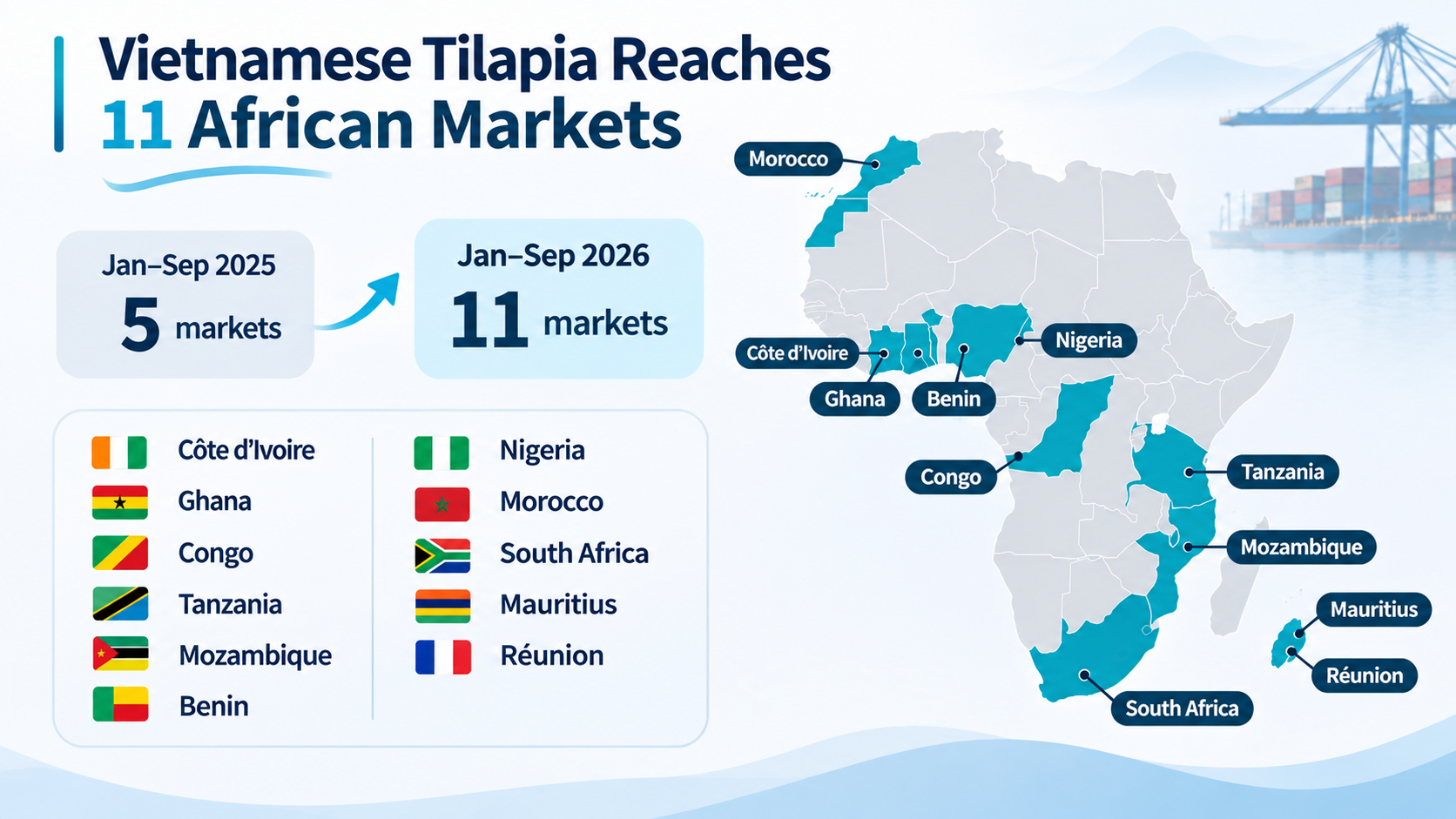
Alongside the increase in export value, Vietnam expanded its tilapia export destinations across Africa.
According to VASEP, Vietnamese tilapia was exported to five African markets during the first nine months of 2025. During the corresponding period of 2026, that number increased to 11:
Côte d'Ivoire (Ivory Coast), Ghana, Congo, Tanzania, Mozambique, Benin, Nigeria, Morocco, South Africa, Mauritius, and Réunion.
The expansion indicates that Vietnamese tilapia is reaching a wider range of destinations. However, export volumes and order frequency still vary considerably between individual markets.
Côte d'Ivoire was the largest African destination for Vietnamese tilapia during the first nine months of 2026.
Export value reached approximately USD 1.3 million, compared with USD 81,000 during the same period in 2025. The country accounted for more than 60% of Vietnam's total tilapia export value to Africa.
From May onward, exports to Côte d'Ivoire were recorded regularly, ranging from approximately USD 170,000 to USD 300,000 per month. Third-quarter exports reached around USD 710,000, nearly nine times the value recorded during the corresponding quarter of 2025.
This performance distinguishes Côte d'Ivoire from other African destinations, where orders remained smaller or less consistent.
Beyond Côte d'Ivoire, several African markets contributed to Vietnam's tilapia export activity, although at smaller values.
Ghana imported approximately USD 190,000 worth of Vietnamese tilapia, with all recorded exports occurring in July.
Exports to Congo and Tanzania each exceeded USD 100,000, while Mozambique recorded approximately USD 70,000.
VASEP also noted a change in Cameroon. The country imported approximately USD 560,000 worth of Vietnamese tilapia during the first nine months of 2025, but no orders were recorded during the corresponding period of 2026.
These differences highlight the uneven distribution of Vietnamese tilapia exports across African destinations, despite the overall expansion in market coverage.
China remains Vietnam's largest competing supplier in the African tilapia market, particularly in the frozen whole tilapia segment.
According to FAO information cited by VASEP, China's exports of frozen whole tilapia increased by nearly 12% in 2025, primarily supported by African demand. Côte d'Ivoire accounted for approximately half of the export volume discussed in that report.
In 2026, as tariffs affected Chinese tilapia exports to the United States, China continued expanding its presence in African markets. During the first quarter, China's frozen whole tilapia exports increased by nearly 40%.
Against this competitive background, Vietnam's ability to enter the Côte d'Ivoire market and maintain regular shipments represents a development in its access to the region.
Nevertheless, competition remains an important consideration for exporters and importers operating in Africa's frozen tilapia trade.
According to VASEP, Africa represents a sizeable consumption market for tilapia, with demand characteristics that align with Vietnam's current export product structure.
Frozen whole tilapia is the principal product category, while buyers in the region generally favor small and medium-sized whole fish. The market is also sensitive to price.
For seafood importers and distributors evaluating tilapia sourcing options, these characteristics emphasize several practical considerations.
Product specifications need to correspond with local consumer preferences and distribution requirements. Transportation costs must also be considered when evaluating the commercial suitability of imported frozen fish.
Understanding distribution channels in individual countries is equally important, particularly because purchasing patterns and order frequency differ across African markets.
These considerations are relevant not only to Africa but also to international seafood buyers seeking products that match their specific market requirements.
As Vietnam's tilapia exports reach more international destinations, importers looking for Vietnamese frozen seafood can explore sourcing options based on their required product specifications.
HIEU NAM INTERNATIONAL is a Vietnamese frozen seafood exporter supplying frozen black tilapia for international B2B buyers.
Our frozen black tilapia product options include:
Buyers can discuss their preferred processing forms, sizes, and packing requirements with our team when preparing a sourcing inquiry.
For importers, wholesalers, seafood distributors, and foodservice businesses looking for frozen black tilapia from Vietnam, HIEU NAM INTERNATIONAL welcomes product inquiries.
HIEU NAM INTERNATIONAL
hieunam.vn
export@hieunam.vn
+84 932 729 052 (WhatsApp/ Viber/ WeChat)
Source: VASEP — “Cá rô phi Việt Nam mở rộng hiện diện tại thị trường châu Phi”, November 17, 2026.